
Shopify B2B on All Plans: What Every Non-Plus Merchant Needs to Know

For years, running native B2B on Shopify meant moving up to Shopify Plus. If you were on Basic, Grow, or Advanced and your DTC store started attracting wholesale requests, your options were limited: lock part of the store behind passwords, manage wholesale pricing through a separate app, or run a second store. None of those approaches hold up once volume picks up. In April 2026, Shopify changed the rules.

Shopify is now extending its foundational B2B feature set to merchants on every paid plan at no additional cost. The features that lived only inside Shopify Plus for nearly four years are part of the standard admin going forward. This is one of the most consequential commerce updates Shopify has released for non-Plus merchants in years, and it changes how smaller B2B operators can get started.

Shopify B2B features now available on non-Plus plans

Table of Contents

What's now included on Basic, Grow, and Advanced

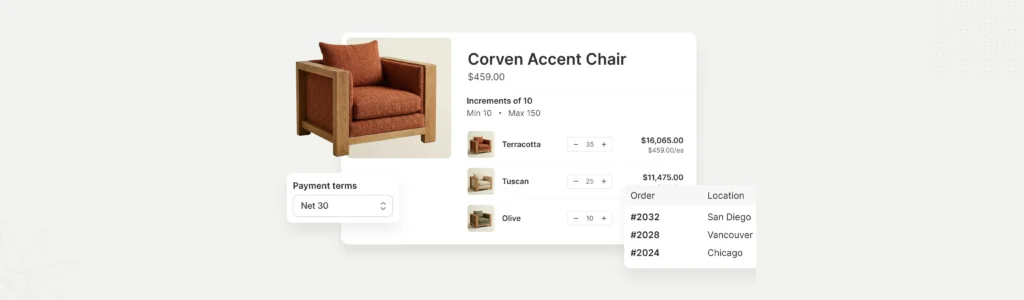
Native Shopify B2B on all plans now covers the core building blocks of a wholesale operation. According to Shopify’s official announcement and the Help Center, non-Plus merchants can use:
 
  • Company profiles for wholesale buyers, with multiple buyer logins under a single company record
  • Up to three active B2B catalogs, assigned through Shopify Markets
  • Custom pricing per catalog, including volume discounts and quantity rules
  • Net payment terms (Net 15, Net 30, Net 60, Net 90)
  • Vaulted credit cards for repeat buyers
  • ACH bank transfer payments (U.S. only)
  • Self-serve B2B ordering connected to Shopify Flow, Markets, and Shopify Payments
The last point is the one that tends to get overlooked. Because B2B is built into the core platform, automations, multi-currency selling, and payments work for wholesale the same way they work for DTC. There is no parallel system to maintain, no separate customer database, no duplicate inventory feed.

What's still Plus-only

Shopify drew a clear line between starter B2B and enterprise B2B. These capabilities remain exclusive to Shopify Plus:
 
  • Unlimited B2B catalogs for customer-specific pricing
  • Direct catalog assignment to companies and locations (rather than via Markets)
  • Partial payments and deposits
  • Deeper checkout customization through Shopify Functions
If your wholesale program runs on dozens of negotiated price lists, multi-location buyers, or workflows that require a deposit before fulfillment, Plus is still the right tier. For most merchants entering B2B for the first time, the entry point is now far lower than it was a month ago.

What this means for merchants new to wholesale

The global B2B eCommerce market is valued at roughly $36 trillion according to the International Trade Administration. Most of that is still moving by phone, email, and PDF order forms. The merchants who win the next phase will be the ones who let buyers self-serve. This update closes a big part of the gap for smaller sellers. Three practical reasons it matters:

1. Lower cost to test wholesale demand

Before April 2026, a Basic or Advanced merchant fielding wholesale interest had to either pay for Plus or stitch together a manual workaround. Now you can stand up a real B2B buying experience on your current plan, prove out the channel, and grow into Plus when the volume justifies it.

2. One source of truth for orders and customers

When wholesale runs in a separate app, customer records, inventory, and order history split across systems. Reconciliation becomes a part-time job. Native B2B keeps everything in one admin, which is the same architectural principle that protects the back office from breaking as the business grows.

3. Faster setup, less custom development

Company accounts, catalogs, and payment terms ship out of the box. You don’t need to build a wholesale portal from scratch. That cuts time to launch from months to weeks, and removes the risk that comes with brittle custom code.
Shopify reports that merchants using Shopify B2B see up to a 4.1x increase in reorder frequency compared to DTC, and up to a 33% increase in self-serve orders within six months. Those numbers came from Plus merchants. They are a reasonable signal for what is possible once the same features ship on standard plans.

Where the new feature set hits its ceiling

We have implemented B2B on Shopify Plus for parts distributors, medical suppliers, bridal wholesalers, and specialty retailers. A few honest observations as standard plans take on B2B:

Three catalogs is enough to segment by tier (dealer, retailer, distributor, for example). It is not enough if you negotiate prices per account. Catalog assignment through Markets is workable, but Markets was built for geography first. Mapping it to B2B segments requires planning. ACH and vaulted credit cards cover most North American wholesale. Outside the U.S., payment options will still depend on what your Shopify Payments region supports. Tax handling for wholesale (exemption certificates, multi-state nexus) still benefits from an integration with your ERP, especially if NetSuite is your system of record.

These are not blockers. They are design decisions to make before you turn the features on. Getting them right at the start avoids a painful replatforming conversation 18 months later.

What to do next

We have implemented B2B on Shopify Plus for parts distributors, medical suppliers, bridal wholesalers, and specialty retailers. A few honest observations as standard plans take on B2B:

If you are on Basic, Grow, or Advanced and you have been told for years that B2B required Plus, the next 90 days are an opportunity. A practical sequence:

  1. Audit the wholesale requests you have turned away or worked around in the last 12 months.
  2. Map your buyers into two or three pricing tiers that fit within three catalogs.
  3. Decide what payment terms you can responsibly offer. Net 30 is the most common starting point.
  4. Configure companies, catalogs, and payment terms in the Shopify admin.
  5. Sync the resulting orders to your ERP so finance is not running parallel books.

Why These Updates Matter for Your Business

UnlockCommerce is a Shopify Plus Partner, and we have been building B2B self-service experiences on companies running on NetSuite for more than a decade. Across hundreds of eCommerce projects, the same pattern keeps repeating: B2B features only deliver results when they are designed around how your business actually operates, with the ERP protected as the source of truth.

If you are a Shopify merchant getting serious about wholesale, we can help you scope catalogs, configure company accounts, design pricing logic, and integrate the back end with your ERP so finance, fulfillment, and customer service stay in sync.

Ready to talk through what your Shopify B2B setup should look like?

Book a 30-minute consultation with our team. We will walk through your wholesale use case and tell you whether you can stay on your current plan or whether Shopify Plus is the right move.

Share this post

You may also like

NetSuite Order History App for Shopify

Show NetSuite and Shopify orders together in one Shopify customer account. The UnlockCommerce app for B2B and B2C brands running NetSuite as their ERP.